






境外公司手機橫幅 中
境外公司橫幅04

文章目录

上海 Shanghai
TEL:+86 21-6090-4391

深圳 Shenzhen
TEL:+86 755-83176807

台北 Taipei
TEL:+886-2-2557-5607

台中 Taichung
TEL:+886-4-2320-2793

interarea@interarea.cn

Home - Offshore Company - Offshore Company Registration Introduction

Offshore Company Registration Introduction

With the trend of global business expansion, establishing an offshore company has become an important strategy for businesses engaged in international trade, overseas investment, and cross-border asset planning. Common jurisdictions include Singapore, the British Virgin Islands (BVI), the Cayman Islands, and Hong Kong. It is estimated that more than two million offshore companies have been established worldwide, and approximately 40% of global trade is conducted through these entities. Although recent international tax reforms have reduced some of the traditional advantages of certain jurisdictions, a number of locations continue to offer attractive benefits for international business activities.

As the global tax landscape evolves and anti-money laundering (AML) regulations become increasingly stringent, establishing an offshore company is no longer simply a matter of company registration. Businesses must also carefully consider bank account opening, compliance obligations, and ongoing maintenance costs. This article provides an overview of offshore companies, their common uses, comparisons of popular jurisdictions, and the key compliance and maintenance considerations after incorporation.

I.What is an offshore company?

I.What is an offshore company?

Offshore companies are also called OBU companies. An offshore company generally refers to a company incorporated in a jurisdiction other than where its shareholders reside or where its primary business operations are conducted. In most cases, the company’s main business activities are not carried out within its place of incorporation. Businesses may choose to establish offshore companies in different jurisdictions for purposes such as cross-border investment, international trade, corporate structuring, shareholding arrangements, and global expansion strategies. Common offshore companies are established in places like Seychelles, Marshall Islands, British Virgin Islands BVI, Belize, Hong Kong, Samoa, United Kingdom, Labuan… etc.


手機板廣告06 1
  • Offshore companies are similar to domestic companies in that they can open bank accounts, own property, conduct business, sign written agreements, trading, and engage in other forms of business activities. They are also known as international business companies (IBC or Offshore IBC).


  • An offshore company is typically a company established in a country or region that is different from the country of residence of the company’s owner. This means that it does not engage in any economic activities in that specific country or region. For example, if your business operates in Europe and uses a Hong Kong company to conduct European trade while conducting business activities outside of Hong Kong to take advantage of benefits such as Hong Kong’s income tax exemption, some may wonder if this is a violation of the law.”
  •  It is common to associate offshore companies with criminal and corrupt individuals who seek to evade taxes. While this may be true in some cases, many companies use offshore companies for legitimate reasons. Just like any other type of company, offshore companies are subject to the laws of their jurisdiction, allowing for legal business conduct.”

II.Common Uses of Offshore Companies

II.Common Uses of Offshore Companies

Offshore companies can be utilized for a variety of purposes, including cross-border investment, international trade, and asset planning. So, why establish an offshore company? What are the advantages of setting up an offshore company?

The answer lies in the fact that offshore companies offer a wide range of applications and operational structures. Furthermore, different jurisdictions provide distinct regulatory frameworks, business environments, and advantages. Depending on a company’s objectives and business model. The following are common uses of offshore companies:


image

Conduct triangular trade or cross-trade in the international market. Offshore companies can serve as trade intermediaries for sales, distribution, import,and export.

境外icon02 1

Establish offshore companies to invest in entities in various countries to reduce investment risks.

2

You can take advantage of tax incentives offered by offshore companies, which often havelow or no taxes, contributing to the growth and expansion of your business.

3

Offshore companies can hold the intellectual property rights to protect your company'spatents, trademarks, copyrights, and other IP assets.

The above are the main advantages of registering an offshore company,
The advantages are detailed below.

Offshore companies are commonly used in triangular trade and international import/export activities, serving as intermediaries for trade and fund flows. They can help businesses manage cross-border transactions more efficiently and provide greater flexibility in international operations.

Offshore companies are often established as investment or holding vehicles to manage overseas investments and global capital arrangements. A well-structured holding company can enhance investment management efficiency and support risk segregation.

One of the key reasons businesses establish offshore companies is to take advantage of different tax systems across jurisdictions. Through proper planning, companies may optimize their tax structure and improve operational efficiency while remaining compliant with applicable regulations.Of course, setting up an offshore company does not exempt its owners from all personal tax obligations in their home country. However, skillfully leveraging an offshore company can reduce the tax burden on dividends, royalties, interest, and capital gains for businesses.

Offshore companies can hold the intellectual property rights to protect your company’s patents, trademarks, copyrights, and other IP assets. From infringement and secure them from potential litigation and political instability. An extra layer of protection is added when your company is located overseas.

Offshore companies are also widely used for international asset holding and wealth planning. They can facilitate the management of overseas assets, support succession planning, and provide greater flexibility for cross-border asset administration.

Variable interest entity, also known as agreement control, is a legal business structure in which investors still have controlling rights even though investors do not have the majority voting rights. VIE actually controls a company not by holding shares but by signing agreements.

If you set up an offshore company in a certain country, it is usually easier to obtain an offshore bank account. Through this account, remote transactions can be quickly made anywhere in the world, which can bring significant convenience and advantages to the company. Some businesses may also leverage an offshore parent company’s deposits or credit standing and coordinate with domestic and overseas banks to arrange credit facilities or secured financing, helping affiliated companies obtain working capital.

Another major advantage of placing funds in a foreign jurisdiction is the ability to benefit from the political and economic stability of that country. For instance, in recent years, many multinational corporations have chosen to register companies and conduct business in Singapore. One key consideration is Singapore’s stable political and business environment, efficient policy implementation, and its support for long-term corporate development.

III.Which Businesses Are Suitable for Establishing an Offshore Company?

III.Which Businesses Are Suitable for Establishing an Offshore Company?

Not every business is suitable for setting up an offshore company. Whether it is appropriate depends on factors such as the company’s business model, customer locations, fund flows, and future plans for physical operations or cross-border investments.

The following are some common types of businesses that may consider establishing an offshore company:


  • Companies engaged in cross-border trade or international business:Businesses with overseas customers and frequent international payments, foreign currency transactions, or cross-border trade activities.
  • Companies focused on overseas investment or holding structures:Businesses that use offshore companies as holding entities to manage investments across different jurisdictions.

  • Digital service, consulting, or software companies:Businesses serving international clients may consider offshore structures for receiving payments and supporting global operations.

  • International e-commerce and cross-border platform sellers:Companies using platforms or payment solutions such as PayPal, Stripe, Tmall Global, or JD Worldwide may evaluate offshore companies to support international payments and supply chain arrangements.

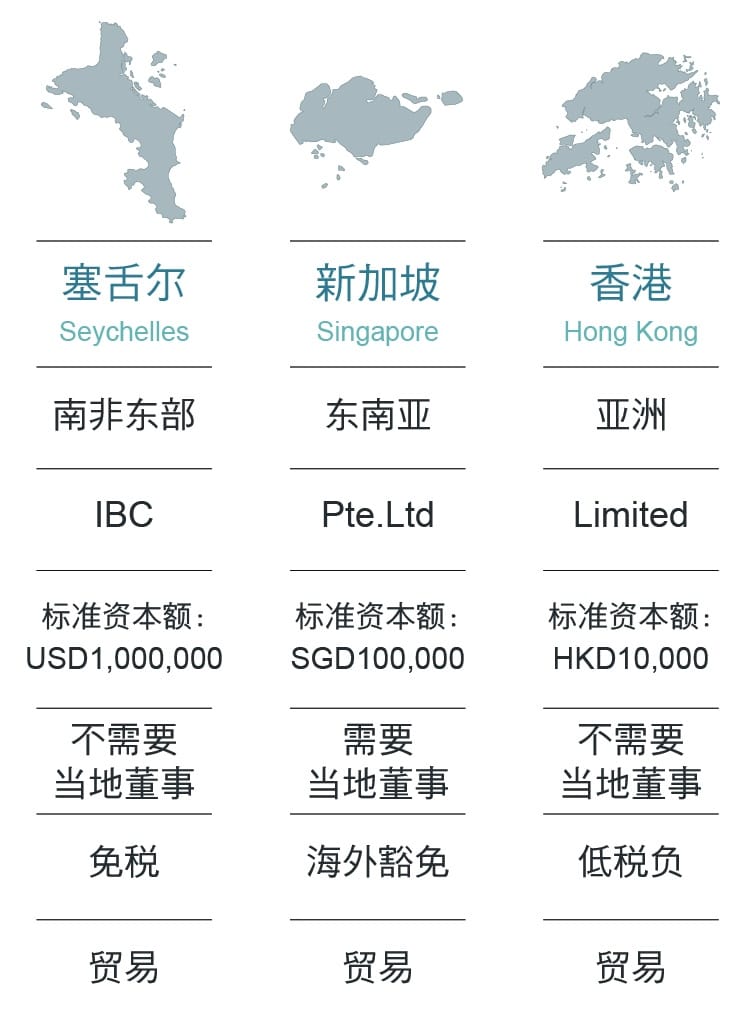
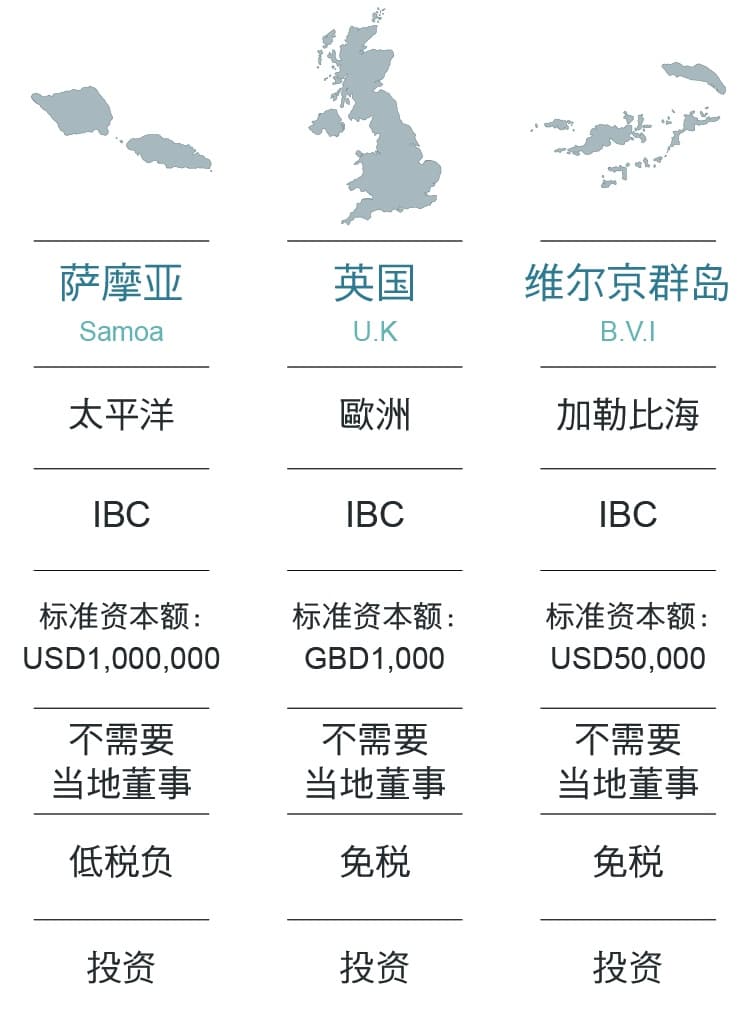
设立离岸公司要选在哪里呢?离岸公司选择与比较表格如下:

设立离岸公司要选在哪里呢?
离岸公司选择与比较表格如下:

境外公司比較表簡體 表格簡
境外公司功能簡介簡體表格-手機_工作區域 1
境外公司功能簡介簡體表格-手機-02

以上资讯仅供参考,实际需依当地实施规范为准

四、强化全球布局的高度弹性与多元化

强化全球布局的
高度弹性与多元化

全球布局的高度弹性 Highly Flexible

  • 离岸公司(OBU)的发展历程经历了从较低信息披露要求转向规范透明,从单纯的贸易模式向投资领域拓展,并伴随税务优惠政策的演变。随着现代算法和大数据处理技术的应用,企业在国际投资中面临的决策挑战比以往更加复杂,如在高强度决策场景下的快速判断与调整,整个过程要求企业具备更高的专业能力与应变能力。

全球布局的多元化 Global Diversified

  • 我们想表达的意思是,传统操作模式已不再适用,实际操作比表面看起来更复杂。企业或投资者应选择最适合的策略和操作顺序,实现高效运作与落地执行。成功的最佳策略往往出现在充分准备与机遇交汇之处,以战略眼光规划未来。
  • 汇佳国际的市场信息团队专注于离岸公司(OBU)相关事务,我们帮助客户了解离岸公司的功能,并提供从规划、注册到实际操作案例及注意事项的最新资讯。我们致力于提供最完整、最快速、最可靠的服务。重点是根据客户的实际投资背景和目标,通过不同的产品与服务,为客户带来全新的体验,从而决定未来的价值。

我们努力提升并维护客户关系的整体价值。在需要规划咨询时,您可获取专业建议及最新资讯。如有任何需求,欢迎随时联系汇佳国际团队。

注册离岸公司:常见问题Q&A

Q1.申办离岸公司需要多少工作天?

A: 整个过程可能需要3天到3周的时间不等,这取决于公司设立在哪个国家或区域。

Q2.离岸公司登记的英文名称,是否有什么限制?

A: 是,公司名称通常以 Limited(有限公司)、Corporation(股份公司)、Incorporation(注册公司)等形式结尾。部分词语受到法律或行政限制,不能随意使用。例如,涉及特定许可的活动,如银行(Bank)、保险(Assurance)、学会(Society)、信托(Trust)等词,必须在通过相关许可程序、并实际开展相关业务的前提下方可使用。

A: 事实上,您可以使用这些词,但前提是您通过只在实际开展特定活动的事先许可程序。例如,要允许在您的公司名称中使用“银行”,您必须向当地金融服务委员会申请银行牌照。另一类受限词包括可能误导公众认为公司与政府或官方机构存在关联的词语,如政府(Government)、帝国(Imperial)、商会(Chamber of Commerce)、市政(Municipal)等。此外,“皇家”(Royal)等字样也禁止使用。

Q3.离岸公司的资本额需要到位吗?

A: 不需要,目前设立离岸公司采用登记制,注册资本无需实缴。部分境外公司在设立时,甚至不需要在成立文件中说明任何授权或注册资本金额。如业务需要,可自行选择披露注册资本等信息。公司仅需说明其总股份数量(用于确定各股东持股比例),无需为每股设定固定货币面值。

Q4.离岸公司几人可设立?

A: 离岸公司设立需遵循各国法律法规。通常情况下,如英属维尔京群岛、塞舌尔、萨摩亚等地区,可由一名股东完成设立。少数地区,如新加坡公司设立时需指定至少一名当地董事。

Q5.请问是否本人需亲自至国外办理离岸公司设立?

A: 公司负责人不需前往当地设立境外公司,负责人只需提供相关资料并签署公司设立文件之后,委托专业秘书公司即可办理。

Q6.要怎么维持离岸公司的有效性?

A: 离岸公司注册国的政府每年按时固定会收取年度规费以维持其有效存续,部份地区仍需符合当地法令作额外申报。

A: 一般在到期之前,秘书代理公司会提前通知客户,让客户确认是否继续存续,如果要继续存续则需要缴交年度费用(年费),以便在公司继续运营期间维持您的离岸公司,持续在注册国规范下保持良好的法律地位。

Q7.离岸公司应该选择登记在哪?

A: 这可以说是遇到的最常见问题之一,隐藏在这问题后面的实际问题是,成立境外公司的目的是什么?根据您想要的功用,国家/地区会有所不同。

A: 另外,很大程度上取决于您拥有的业务类型.然后是国籍和居住国的问题,此外还有一些考虑因素。这就是为什么需要咨询专业的代办公司,引导客户完成所有步骤并确保没有任何事情被忽略掉的。

A: 离岸公司最常见的一些国家是像是英属维尔京群岛BVI、塞舌尔、萨摩亚、新加坡、香港、英国…等,设立地点的选择需依您的实际需求而定,对各国/地区的法律制度、税制、声誉与使用目的进行评估。有些司法管辖区适合集贸易活动,有些则更适合资产配置或投资架构;对 A 客户有效的架构,未必适用于 B 客户。因此,选择登记地前需明确您的用途与目标。

Q8.离岸公司如果不使用了,需要注销吗?

A: 离岸公司如确认不再使用,传统离岸设立地如萨摩亚、英属维尔京群岛等,一般小型企业或个人可以选择不续缴年费即可,但部分离岸设立地如香港、新加坡则需要另外申请注销。

A: 但不续缴年费仍须注意,不续缴未注销的公司仍应对任何到期和未支付的费用负责。该公司还对其所有义务和债务承担责任。未续费的公司不得合法继续交易或进行任何新的交易,其董事、股东、经理和所有者不得与公司资产进行任何交易。

A: 因为本质上,公司在不续缴但未注销的情况下,在期限内仍可以跟注册局申请恢复,但根据逾期的时间长短,将会额外收取大量政府费用及罚金。

注册离岸公司:
常见问题Q&A

A:整个过程可能需要3天到3周的时间不等,这取决于公司设立在哪个国家或区域。

A:是,公司名称通常以 Limited(有限公司)、Corporation(股份公司)、Incorporation(注册公司)等形式结尾。部分词语受到法律或行政限制,不能随意使用。例如,涉及特定许可的活动,如银行(Bank)、保险(Assurance)、学会(Society)、信托(Trust)等词,必须在通过相关许可程序、并实际开展相关业务的前提下方可使用。

事实上,您可以使用这些词,但前提是您通过旨在实际开展特定活动的事先许可程序。例如,要允许在您的公司名称中使用“银行”,您必须向当地金融服务委员会申请银行牌照。另一类受限词包括可能误导公众认为公司与政府或官方机构存在关联的词语,如政府(Government)、帝国(Imperial)、商会(Chamber of Commerce)、市政(Municipal)等。此外,“皇家”(Royal)等字样也禁止使用。

A:不需要,目前设立境外公司是采登记制,注册资本金可以不用到位。某些境外公司设立第甚至不需要在其成立文件中说明任何授权或注册资本金额。当然,如果业务环境需要,它可以选择这样做。公司只需要说明它总共拥有多少股份(这可以确定任何特定股东持有公司的百分比),但没有要求为每一股附加固定的货币价值。

A:需依各国法令规定,但一般如英属维京群岛、塞舌尔、萨摩亚等地区只需一人即可设立,少部分设立地如新加坡公司公司则会另外要求要有一位当地董事。

A:公司负责人不需前往当地设立离岸公司,负责人只需提供相关资料并签署公司设立文件之后,委托专业秘书公司即可办理。

A:离岸公司注册国的政府每年按时固定会收取年度规费以维持其有效存续,部份地区仍需符合当地法令作额外申报。

A:这可以说是遇到的最常见问题之一,隐藏在这问题后面的实际问题是,成立离岸公司的目的是什么?根据您想要的功用,国家/地区会有所不同。另外,很大程度上取决于您拥有的业务类型.然后是国籍和居住国的问题,此外还有一些考虑因素。这就是为什么需要咨询专业的代办公司,引导客户完成所有步骤并确保没有任何事情被忽略掉的。
离岸公司最常见的一些国家是像是英属维尔京群岛BVI、塞舌尔、萨摩亚、新加坡、中国香港、英国…等,设立地点的选择需依您的实际需求而定,对各国/地区的法律制度、税制、声誉与使用目的进行评估。有些司法管辖区适合集贸易活动,有些则更适合资产配置或投资架构;对 A 客户有效的架构,未必适用于 B 客户。因此,选择登记地前需明确您的用途与目标。

A:离岸公司如确认不再使用,传统离岸设立地如萨摩亚、维京群岛等,一般小型企业或个人可以选择不续缴年费即可,但部分离岸设立地如中国香港、新加坡则需要另外申请注销。但不续缴年费仍须注意,不续缴未注销的公司仍应对任何到期和未支付的费用负责。该公司还对其所有义务和债务承担责任。
未续费的公司不得合法继续交易或进行任何新的交易,其董事、股东、经理和所有者不得与公司资产进行任何交易。因为本质上,公司在不续缴但未注销的情况下,在期限内仍可以跟注册局申请恢复,但根据逾期的时间长短,将会额外收取大量政府费用及罚金。

相关主题 Related topics